The AI Gap: Why Solo NZ Businesses Are Winning
The AI Gap Is Widening, and Solo Operators Are Quietly on the Right Side of It
There's a number that came out of MYOB's 2026 Business Monitor this month that's worth sitting with for a second.
MYOB found that 36% of New Zealand SMEs are now using AI in their business, up from 32% a year earlier. Sounds like steady progress. Until you split it by business size. Firms with 20 or more staff are sitting at 64% adoption. Small businesses with one to five staff? Just 30%.
That's not a gap. That's a canyon. And it's getting wider, not narrower.
If you're running a business on your own, or with one or two people, here's the uncomfortable bit: your bigger competitors already made the call. They're automating the boring, repetitive parts of customer contact while you're still doing it all yourself between appointments, jobs, or client sessions. That's not a fair fight, and it's not going to get fairer by ignoring it.
Why Small Businesses Are Behind (and It's Not What You Think)
The easy explanation is that small business owners are slow to adopt new tech, or too busy, or a bit scared of it. That's lazy thinking, and it's wrong.
Xero ran their own research on this earlier in the year and found something more interesting. 61% of NZ SMEs are already using AI tools proactively, and 45% reckon AI could be the biggest opportunity for their business since the internet showed up. So it's not that small business owners don't see the value. They do.
What's actually holding them back is far more practical: no time to figure it out, real concerns about data and privacy, and no clear starting point. You're not reluctant. You're stretched. There's a difference, and it matters, because it means the fix isn't "try harder to care about AI." The fix is someone else doing the figuring out for you.
The Twist: Solo Operators Are Actually Ahead
Here's the bit MYOB's data doesn't shout about loud enough. Sole operators, the ones with no staff at all, are adopting AI at a higher rate than small businesses with one to five employees. Same 36% as the national average, well ahead of that 30% figure for small teams.
Why? Because when you're the only person in the business, there's no one to hand the admin to. No junior staff member to answer the phone while you're heads-down with a client. No one covering messages while you're at lunch. When you're solo, you either find a way to cover the gaps yourself, or the gaps cost you money.
Solo operators aren't adopting AI because they're more tech-savvy or more forward-thinking than everyone else. They're adopting it because they have to. And honestly, that's the smarter position to be in. Necessity tends to produce better decisions than enthusiasm does.
If that's you, running your business solo, working with clients face to face for hours at a stretch, this isn't a "nice to have someday" conversation. It's already happening around you.
What the Gap Actually Costs You
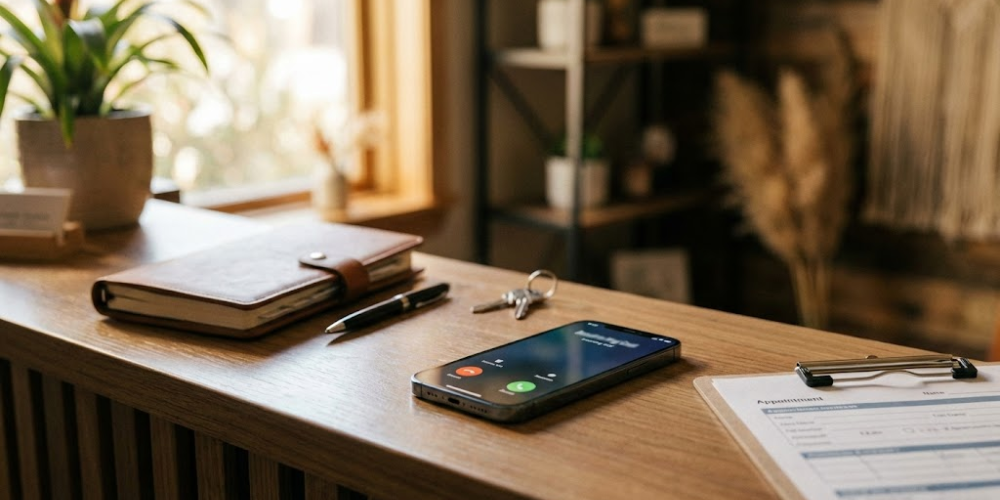
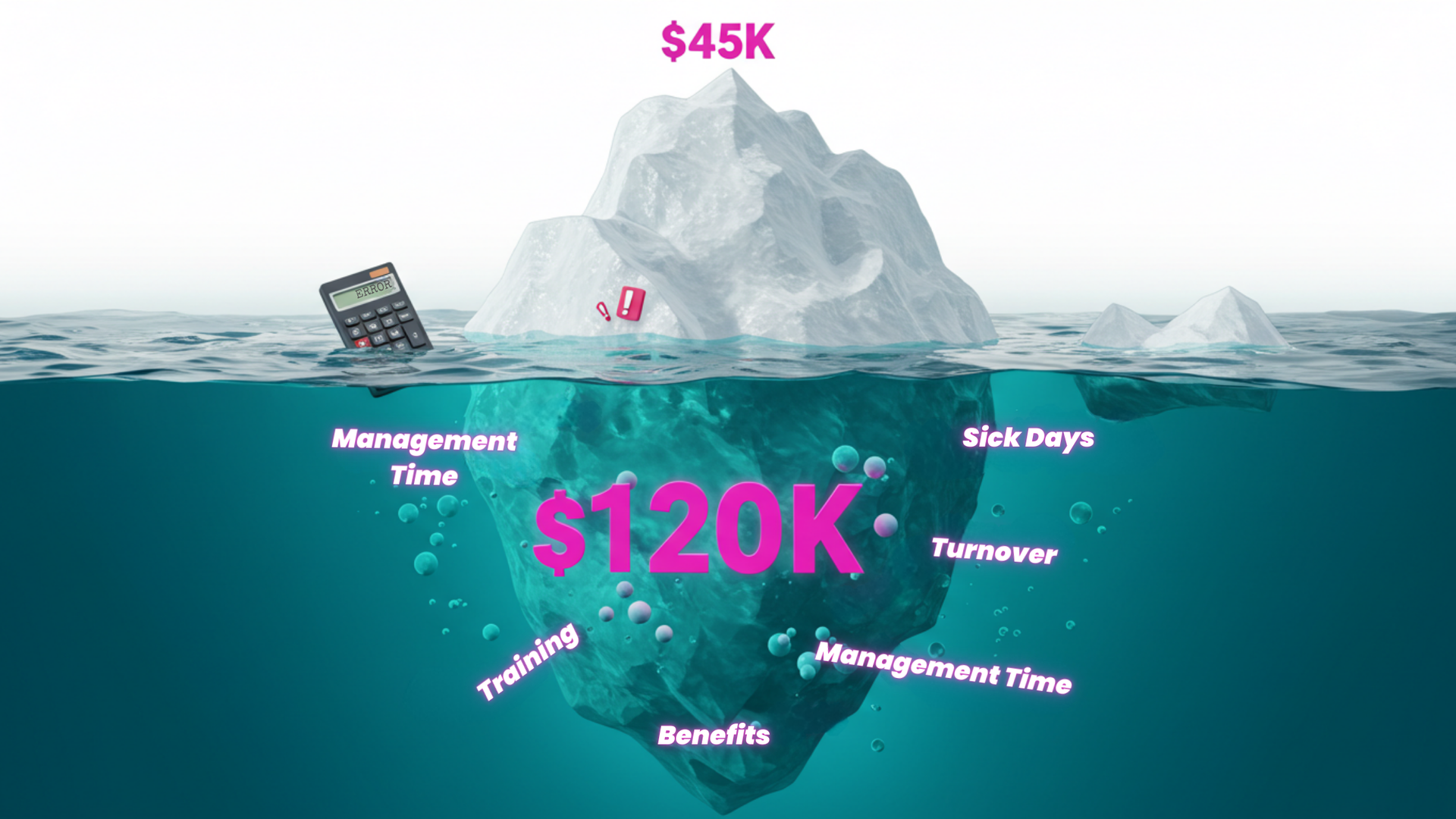
Let's make this concrete. Every hour you're in a treatment, on a job, or heads-down with a client is an hour someone else is trying to reach you. A new enquiry. A booking question. Someone who found you on Instagram and wants to know if you've got space next week.
If they don't hear back fast, they don't wait. They move to the next name on their list. That's not a hypothetical, it's just how people behave when they've got options.
Meanwhile, the bigger operators in your space, the ones with a receptionist, an admin team, or an automated system already running, are answering that same enquiry in minutes. Not because they're better at what they do. Because they've got coverage you don't.
That's the actual shape of "the AI gap." It's not abstract productivity stats. It's the enquiry that went to someone else this week because nobody replied fast enough.
What "Coverage" Actually Looks Like
It helps to get specific about what the bigger operators are actually doing differently, because it's rarely anything fancy.
They're not running some complicated system. They've just made sure three things happen without a human having to be free at that exact moment:
- Someone (or something) answers. A call, a DM, a website enquiry, whatever channel someone chose to reach out on. Not eventually. Now.
- The enquiry gets a real response, not just an acknowledgment. Times, prices, availability, whatever the person actually asked for.
- Nothing gets dropped. If the first message doesn't convert into a booking, there's a follow-up. Not a hopeful assumption that they'll message back themselves.
That's it. That's the whole "gap." It's not about having smarter marketing or a bigger budget. It's about not leaving a two-hour window where the business is effectively closed for enquiries, even though the lights are on and the work is happening right behind the door.
For a business with a full admin team, that coverage happens by default. Someone's always at a desk. For a solo operator, it doesn't happen by default. It has to be built in deliberately, or it doesn't happen at all.
Closing the Gap Doesn't Mean Doing It Yourself
Here's where a lot of small business owners get stuck. They hear "you need to adopt AI" and picture themselves learning new software, building automations, and adding another task to an already full week. No thanks.
That's not the only way in. You don't need to become the person who configures chatbots and writes automation workflows. You need someone to hand the front desk to, so you can stay focused on the actual work you're good at.
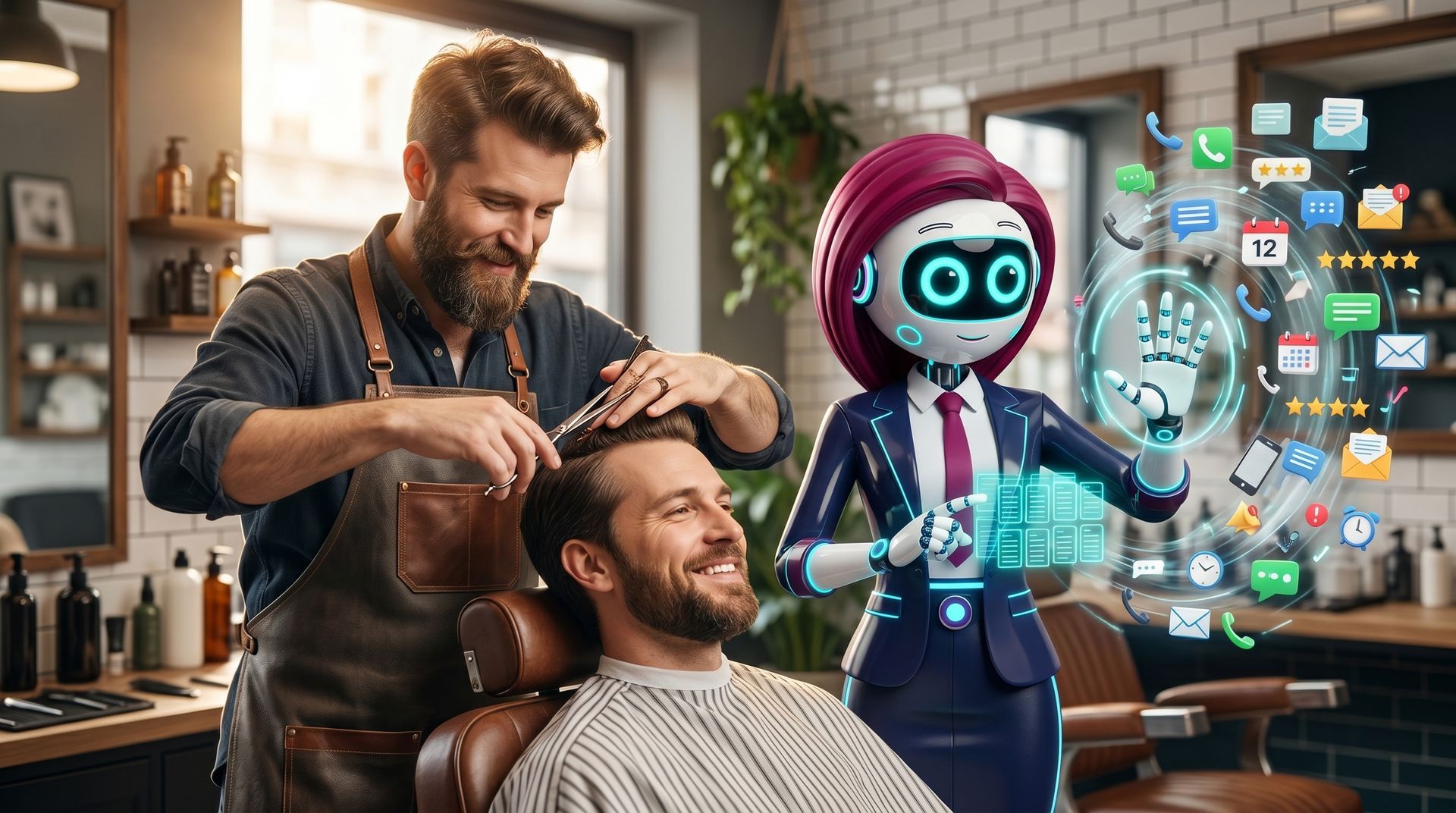
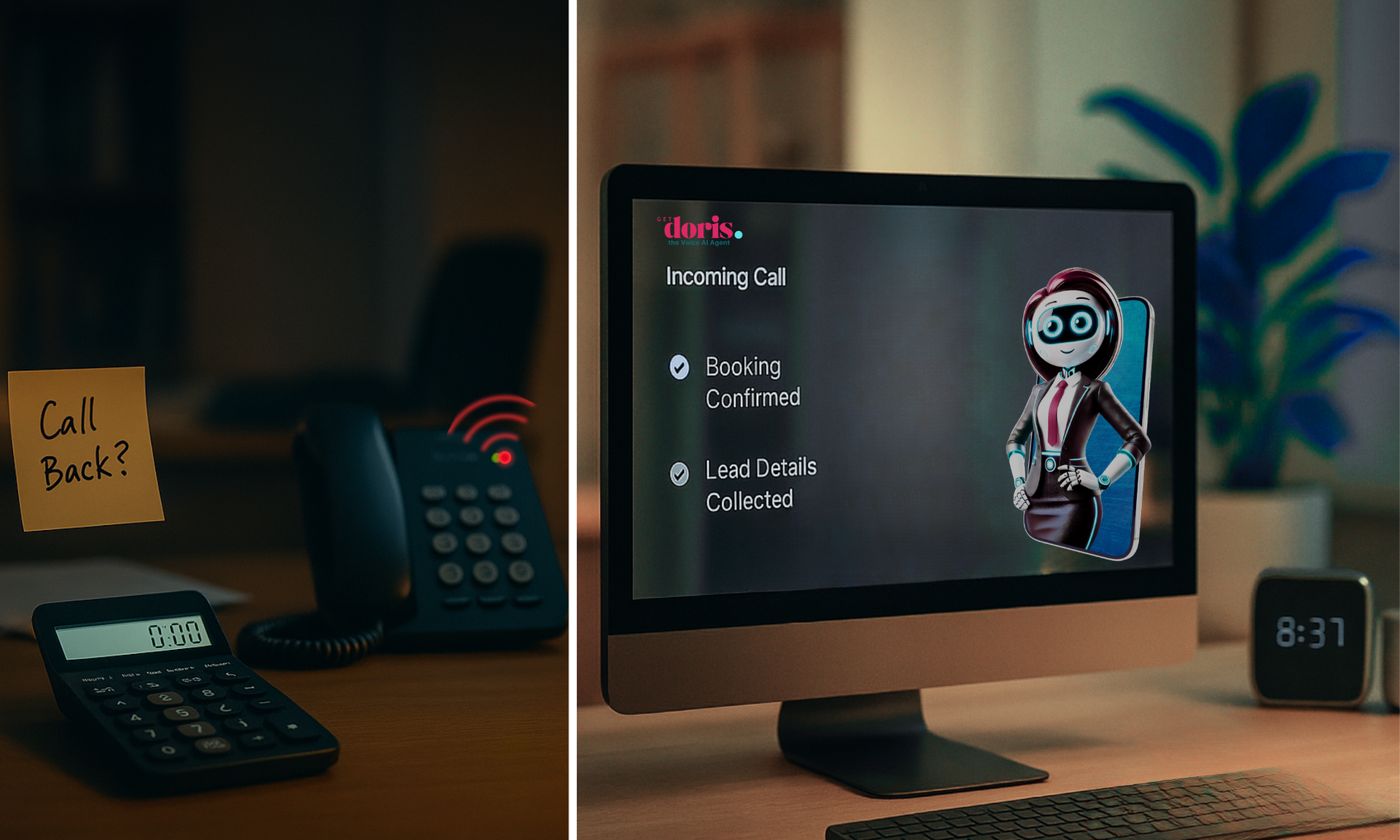
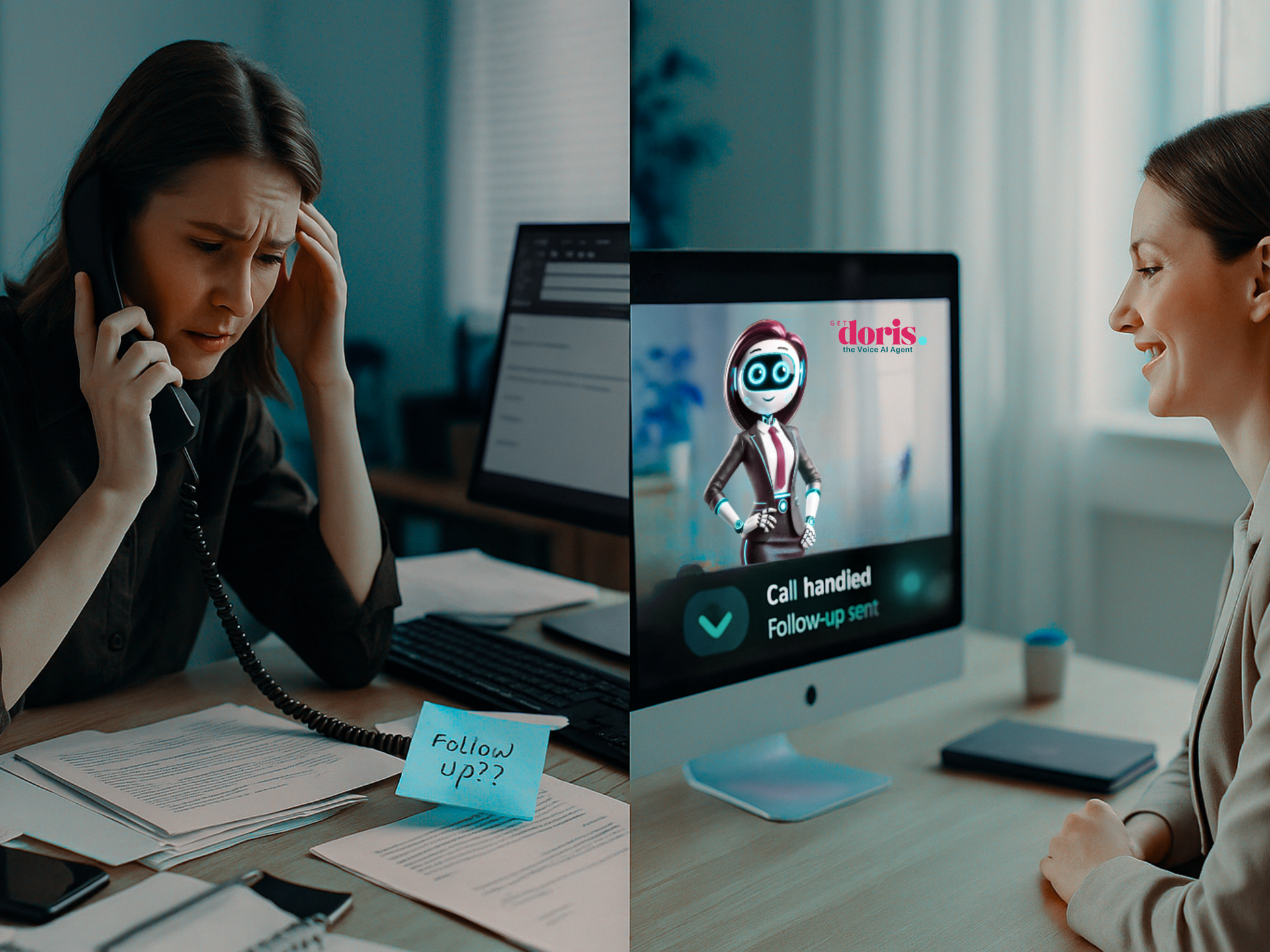
That's the whole idea behind Doris. She answers the calls and messages you can't get to, replies fast enough that people don't wander off to a competitor, and follows up so nothing quietly disappears into an inbox you'll "get to later." You don't build it. You don't manage it. It just runs, in the background, while you do the job you actually trained for.
The businesses pulling ahead in that MYOB data aren't necessarily smarter or more capable than you. They've just got coverage for the parts of the day you can't be in two places at once. That's a solvable problem, and it doesn't require you to become a tech person to solve it.
The Bottom Line
The AI gap is real, and it's widening. But the data also tells a more useful story than "small business is falling behind." It tells you that solo operators, the ones with the least slack in their week, are already leading the way. Not because they had time to spare. Because they didn't.
If you're solo, or close to it, and every enquiry that slips through the cracks is money left on the table, you don't need to catch up to some AI trend. You need someone answering the phone while you're busy doing the work that pays the bills.
That's the gap worth closing first.