How can AI be like you?
How can AI be like you?
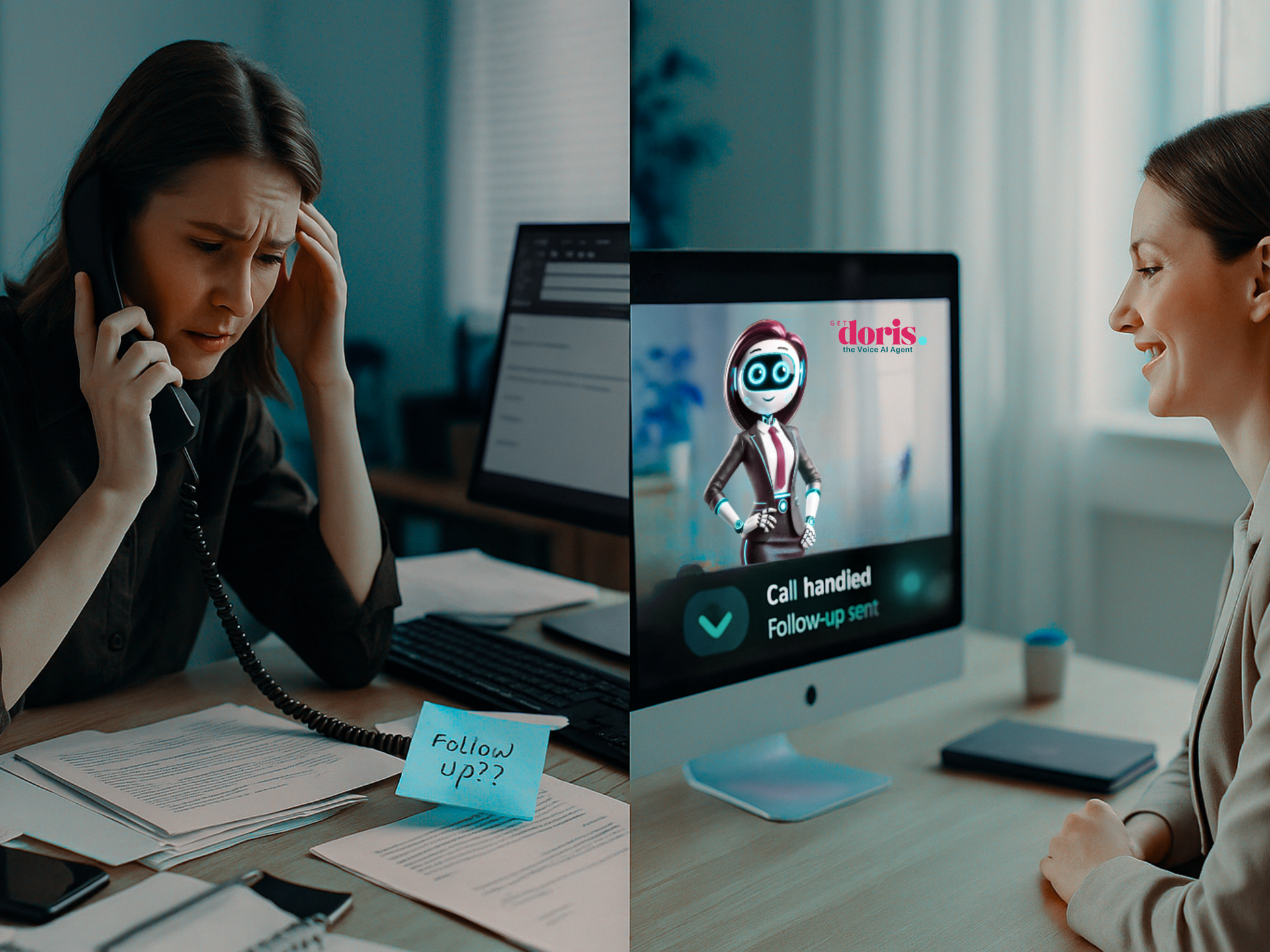
Here's a slightly uncomfortable question: right now, while you're reading this, someone could be trying to reach your business. What are they hearing?
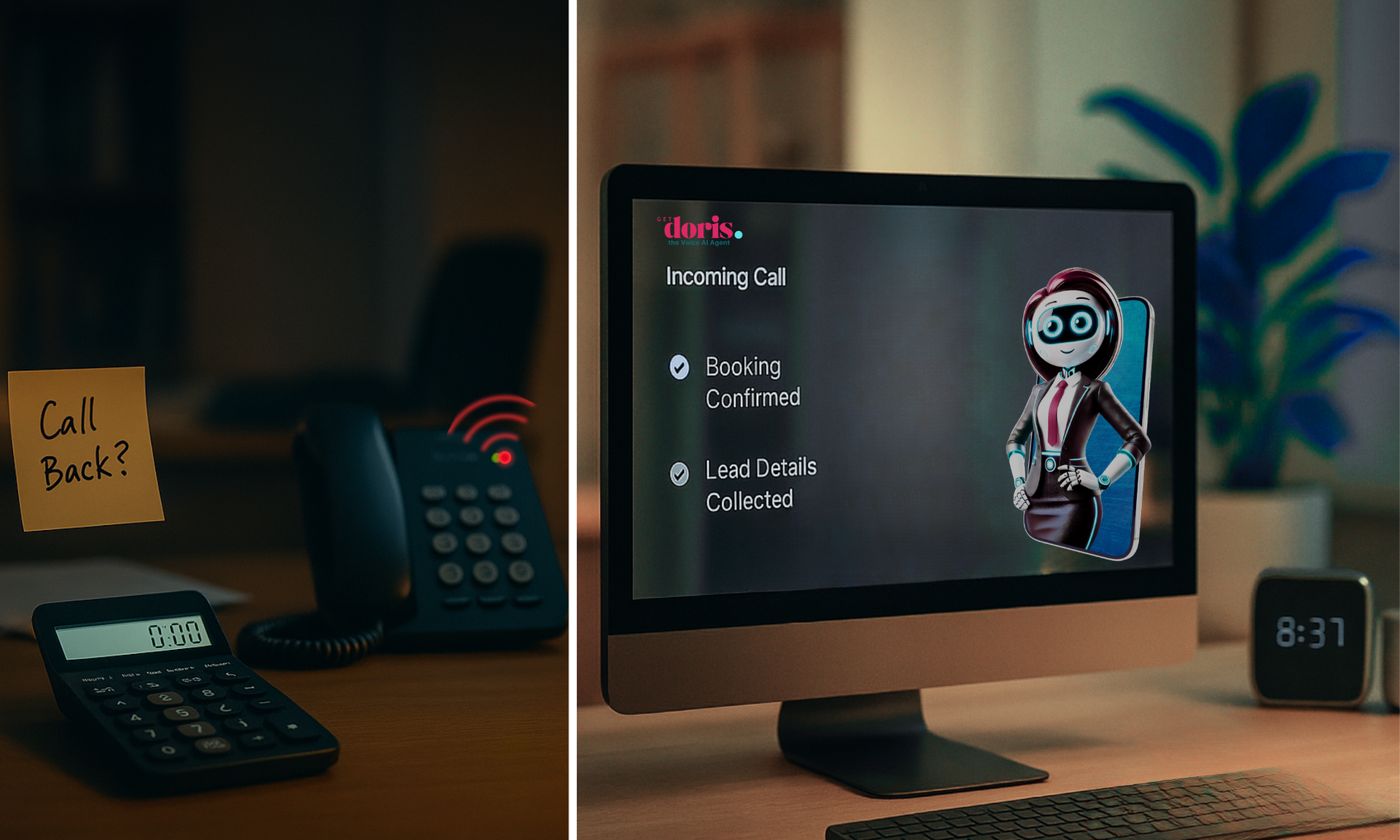
If the answer is "nothing" — a ringtone that goes nowhere, a DM sitting on unread, a website contact form quietly gathering dust — then something is being said on your behalf. It's just not something you'd ever choose.
Silence has a voice. And it says things like "we're not that fussed," "try someone else," and "your money's no good here." Harsh? Maybe. But that's how it lands on the other end, because the person enquiring doesn't know you're elbow-deep in a client treatment or halfway up a ladder. They just know nobody answered.
So let's flip the question around, because this is where it gets useful. If you could script exactly what happens when someone reaches out to your business — every time, without fail — what would it be?
Start with the standard, not the software
Most conversations about AI in small business start in the wrong place. They start with the tech — what it can do, what it costs, whether it'll sound like a robot reading a shopping list. All fair questions, but they're second questions.
The first question is about you. What's your standard? When someone contacts your business, what do you actually want to happen?
Sit with that for a second, because you almost certainly have an answer — you've just never written it down. It probably sounds something like:
- I want them to get a reply quickly, not in three days when I surface from the week.
- I want the reply to sound like me — warm, straight-up, professional. Not stiff. Not weirdly formal. Definitely not "Dear Valued Customer."
- I want the right questions asked. What are they after? Have they done this before? When suits them?
- I want them to feel like they've contacted a business that has its act together.
- And I want to know about it, so nothing slips.
That list is your standard of representation. Every business owner has one — it's the reason you cringe when you find a two-week-old enquiry you never saw. The cringe is the standard. You know exactly how you wanted that handled, and it wasn't.
The problem was never that you don't care. The problem is that you're one person, and your standard requires you to be available at moments when you physically can't be.
The gap between your standard and your reality
If you're a solo operator — a PMU artist mid-treatment, a tradie on the tools, a therapist in session — your working hours are, by definition, the hours you can't respond. The better your business does, the busier you are, and the busier you are, the worse your response times get. Success actively degrades your representation. It's a rude little paradox.
And the timing matters more than most owners realise. Research published in Harvard Business Review found that companies that contacted a lead within an hour were nearly seven times more likely to have a meaningful conversation with the decision-maker than those who waited even an hour longer. That was measuring hours. Today's expectations are tighter — most enquiries come from someone's phone in a spare moment, and by evening they've messaged your competitors too.
So the enquiries that arrive during your busiest, most-booked-out stretches — the ones that prove your marketing is working — are precisely the ones most likely to be answered late, or not at all. Your standard says "reply quickly, sound like me, ask the right questions." Your calendar says "not today, mate."
Something has to hold the line while you work. The question is what.
Representation is a job description
Think about how you'd brief a human receptionist if you hired one tomorrow. You wouldn't say "just answer stuff." You'd tell them how you talk to clients. Which questions to ask a first-timer versus a regular. What your prices are and when to say "let me check with the boss." What never to promise. How to sign off.
In other words, you'd write a job description for representing you. The receptionist doesn't replace you — nobody's confused about who does the actual work. They represent you at the moments you're unavailable, according to rules you set.
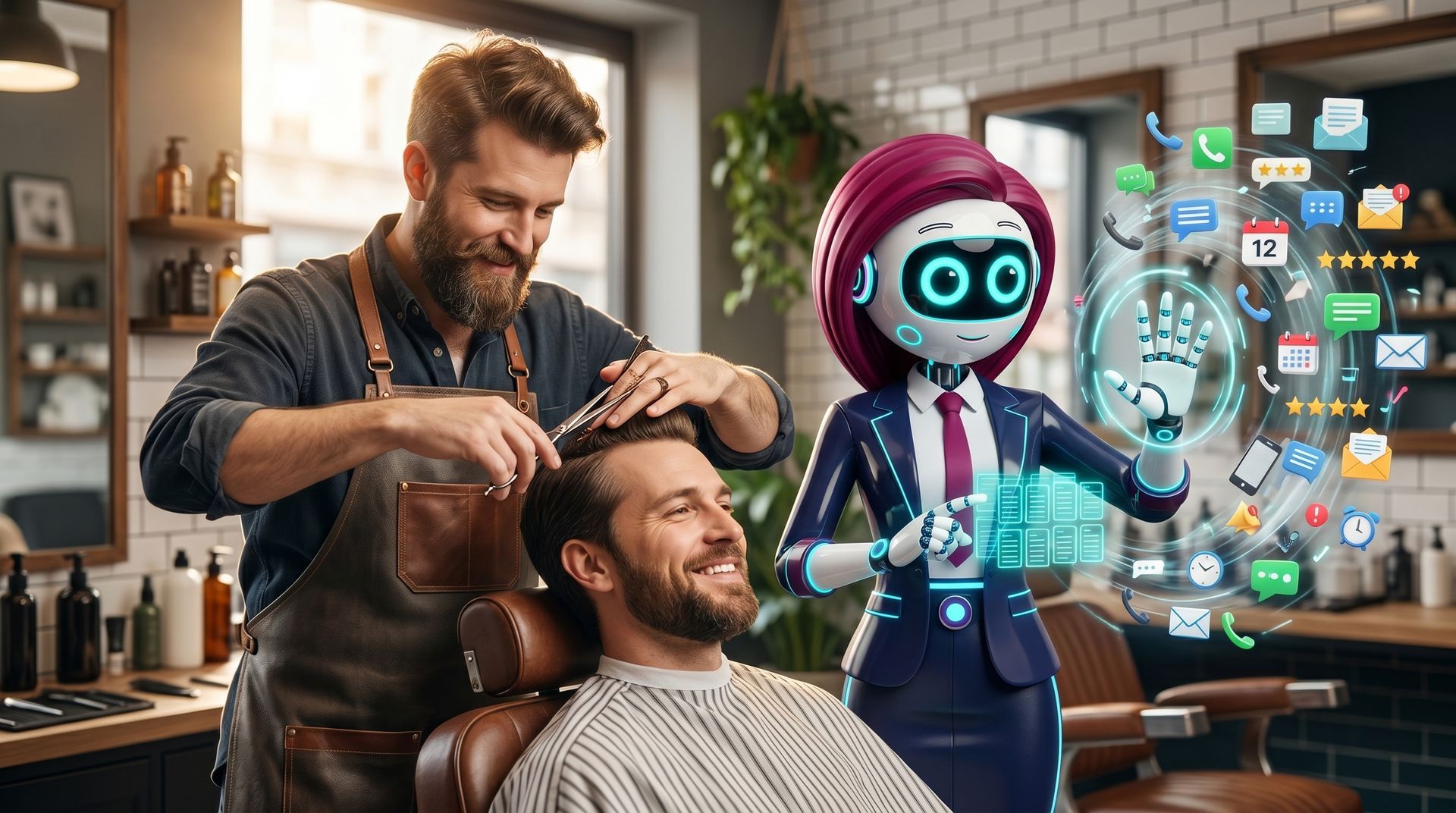
AI done properly works exactly the same way, and this is the bit that gets lost in the noisy "robots are coming for your job" conversation. Well-configured AI isn't a mysterious force with opinions of its own. It's a representative running your job description: your tone, your FAQs, your booking process, your boundaries. You define the standard. It delivers the standard. At 2pm while you're with a client, and at 9:47pm when someone's finally got the kids down and remembers they meant to book that thing.
The controls sit with you:
- Your words. Trained on how you actually communicate — cheeky, formal, somewhere between.
- Your rules. What it can answer, what it books, and what gets flagged straight to you as "human required."
- Your promises. It only commits to what you've told it to commit to. No rogue discounts, no invented opening hours.
- Your visibility. Every conversation logged, so you can see exactly how your business is being represented and tighten the brief whenever you like.
That last point is worth underlining, because it's something you've never had with silence. Silence gives you no transcript, no lead details, no second chance. A representative gives you all three.
The upside nobody mentions: consistency
Here's an honest admission on behalf of every business owner alive: you are not the same communicator at 8am as you are at 8pm. Fresh-coffee you writes lovely, thorough replies. End-of-a-double-booked-Thursday you writes "yep can do, will confirm tmrw" and forgets to confirm tomorrow.
Nobody's judging — that's being human. But your enquirers don't grade on a curve. The person who got the tired reply doesn't know the morning version of you exists. To them, the tired reply is your business.
A representative doesn't have an 8pm version. The standard you set is the standard delivered on the fiftieth enquiry of the month, same as the first. And consistency is quietly becoming the whole game: Salesforce research found that a large majority of customers say the experience a company provides matters as much as its products or services. The experience starts at first contact — long before anyone sees your actual work.
So — what would you want said?
This is the exercise worth doing this week, whether or not you ever touch AI. Grab a coffee and write down your standard of representation:
- Speed. How fast should every enquiry get a first response? Be honest about what's impressive versus what's currently happening.
- Voice. Three words that describe how your business should sound. Then a sentence you'd never want sent under your name.
- Questions. The three to five things you always need to know from a new enquiry before you can help them properly.
- Boundaries. What should never be promised, discounted, or booked without you personally signing off?
- Escalation. Which situations need the actual human — you — and how quickly should you be told?
If you can answer those, you've just written the brief. What you do with it is the interesting part. Some owners hand it to a staff member. Some pin it above the desk as a personal reminder. And some hand it to an AI representative that runs it around the clock, so the standard holds even when the human can't.
That's the real shape of this technology for small business. Not a replacement scheming for your chair — a representative holding your line while you do the work only you can do.
You've spent years building a business worth representing well. Deciding how it gets represented shouldn't be left to chance, fatigue, or an unanswered phone.
Want to hear what that sounds like in practice? Book a demo and put Doris through her paces — she's very good at introductions, especially on your behalf.