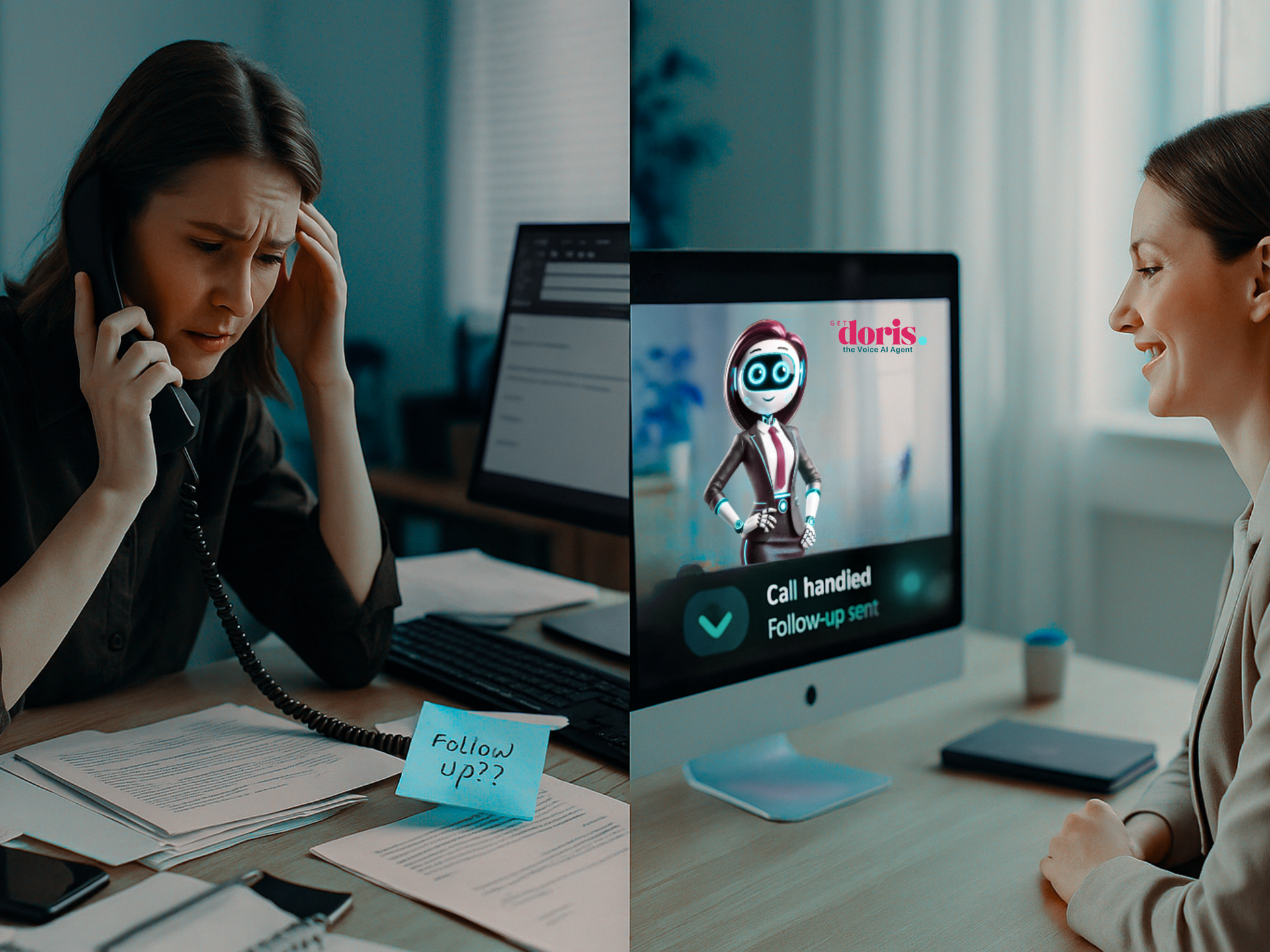
People Don’t Call Businesses Casually
Why missed calls don’t wait — and what to do about it.
Most people don’t pick up the phone for fun.
They call because they’re already in a moment:
- something’s gone wrong
- something feels urgent
- they’ve finally decided to stop thinking about it and do something
Which means the call itself is usually the end of their internal debate, not the start of it.
And that’s why missed calls hurt more than most businesses admit. Not because the caller is offended. Because the caller is efficient.
They don’t sit there thinking, “I hope they’re having a nice day.”
They think, “Cool. Next.”
A call is not an email with sound
A lot of businesses treat calls like they’re just another channel.
They’re not.
A call is a behaviour people choose when:
- they want certainty quickly
- they don’t want to type it all out
- they need to explain something messy
- they’re stressed and just want a human signal back (even if it’s not a human)
When you miss that call, the problem isn’t “we didn’t answer the phone.”
The problem is: you created silence at the exact moment someone wanted reassurance.
Silence creates doubt. Doubt creates shopping around.
The hidden cost of “we’ll call them back”
This is the part that trips people up.
They think the cost of a missed call is one missed call.
But the real cost is what happens in the gap:
- the caller makes a second call elsewhere
- they mentally downgrade you as “hard to deal with”
- they stop being generous about your timelines
- they decide they’ll only message you if they have to
And then you do call them back… and you’re now competing, not converting.
That’s why the “we’ll get back to you” system fails when it’s built on best intentions instead of real-world behaviour.
The moment matters more than the script
If you’ve ever listened to someone leave a voicemail, you’ll recognise the pattern.
They start calm. Then they speed up. Then they get vague. Then they hang up slightly annoyed at themselves for even trying.
That’s not a “bad caller”. That’s a person trying to solve a problem while your business is unavailable.
What they want in that moment is simple:
- acknowledgement
- capture (so they don’t have to repeat themselves)
- confidence that the next step will happen
It’s not about sounding fancy. It’s about being present.
So what does “being present” actually look like?
It looks like a front desk layer that does the boring bits consistently.
Not a magical AI that runs your whole business. Not a robot that quotes, diagnoses, and makes compliance decisions.
Just a system that does the parts most businesses drop when they get busy:
- fast response
- clean lead capture
- consistent follow-up
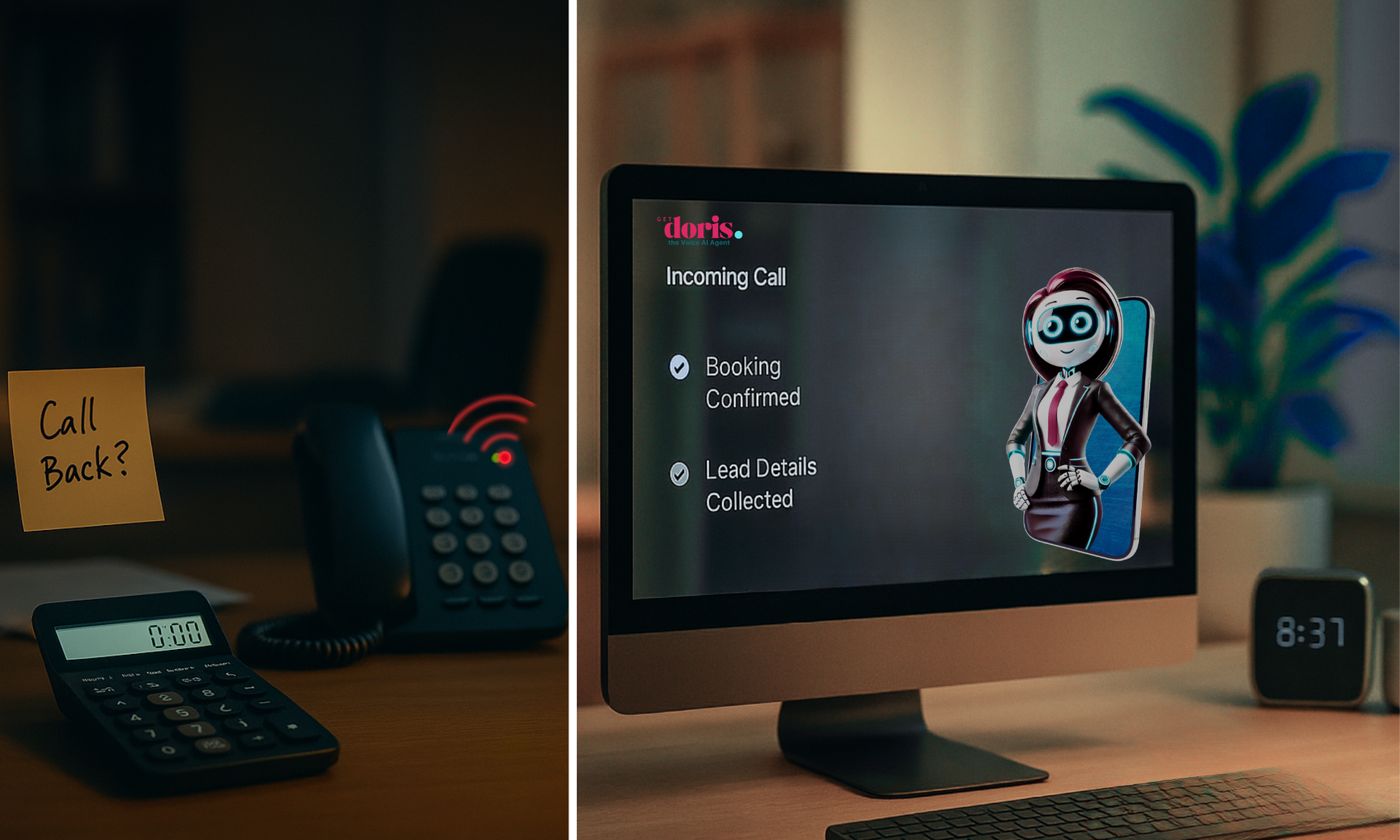
That’s what Doris is built for.
Doris is the front desk layer: she catches the moment people call, even when you can’t.
Two packages. Two problems. No waffling.
Doris is delivered as two productised packages (Founder Special). All pricing is NZD + GST, with a 3-month minimum term.
Doris Message Desk — $325/mo + $1,000 setup
Messaging + missed-call text-back + lead capture + follow-ups.
Doris Receptionist — $595/mo + $1,500 setup
Everything in Message Desk + voice AI call answering (with NZ caveats and fallback).
Here’s the clean way to think about it:
Message Desk is the best first step for most NZ businesses.
Receptionist is for businesses that want calls handled too.
That’s it. Two options. Pick the first problem you want solved.
The NZ voice reality (said calmly, not apologetically)
Voice in NZ can depend on telco layers.
So we don’t sell the fantasy of perfect voice reliability. We build Doris with fallbacks.
Even if a call can’t be answered, the enquiry is still captured via missed-call text-back and messaging.
You’re not buying a promise. You’re buying a safety net that actually shows up.
“But we already have admin / reception.”
Great. Doris isn’t here to replace good people.
She’s here to stop your team being interrupted by the same things all day:
- after-hours calls
- repetitive capture questions
- “just checking…” follow-ups
- the stuff that matters, but shouldn’t steal your attention every five minutes
Doris supports humans by handling the interruptions so your team can focus on the work that needs a human.
Setup isn’t complicated — because it’s productised
People hear “AI” and assume it’s a science project.
It’s not.
Doris is productised on purpose. We use a template build.
You give us:
- your hours
- your top services
- your FAQs
- where enquiries should go
- what follow-up should happen
We build and test.
And we protect delivery time with scope limits, because “unlimited tweaks” is how good systems die slowly.
Both packages include:
- 1 business, 1 location
- max 5 services
- max 15 FAQs
- 1 follow-up sequence pack
- 1 refinement round after go-live
Anything outside that is an enhancement (extra locations, more services, deeper workflows). Clear boundaries keep results clean.
What Doris won’t do (and why that’s good)
If you’ve been sold “AI will run your business”, I have unfortunate news.
Doris is not here to:
- promise perfect voice reliability in NZ
- handle unlimited changes or custom logic forever
- do complex quoting or make compliance decisions
- pretend a multi-location, 20-service operation is “simple setup” without calling it what it is (an enhancement)
That’s not a limitation. That’s a definition.
When the job is “be present in the moment people call,” you don’t need theatre. You need consistency.
A simple rule of thumb
If you’re unsure where to start: start with Message Desk.
If missed calls are a major revenue leak and you want calls handled too: go Receptionist.
And if you don’t know whether missed calls are a leak?
Pay attention for one week. Count how many times you see:
- “missed call” with no follow-up captured
- calls coming in while you’re on a ladder / with a client / in a meeting
- after-hours calls that never become anything because nobody responded
That’s the moment Doris is built to catch.
If you want to stop losing high-intent enquiries to silence, start by solving the first problem: fast response and clean capture. Then decide if you want calls answered as well.
“Which problem do you want solved first — missed calls and slow replies, or having calls answered as well?”